The lights go out in the house. The television and fridge suddenly switch off. An electrical blackout sends the dark house into a panic. Homeowners are desperately scrounging around in the darkness, looking for flashlights and electric lanterns, bumping into bookshelves and tripping over ottomans. An old flashlight is found, but nothing happens when the switch clicks to the ‘ON’ position. Suddenly, a simple battery is no longer an afterthought, it is essential.
Batteries are the unrecognized building blocks of 21st century innovation. From keeping your cellphone connected to Instagram to powering portable workplaces and classrooms through a laptop’s screen, batteries fuel every aspect of modern life. In fact, the argument can be made that battery technology determines the speed at which our world progresses. With each battery advancement, cellphones last a little longer performing increasingly more complex tasks, artificial hearts beat a little surer, and your uncle’s Tesla travels a few miles further.
Batteries may seem simple and boring from their sleek metal exteriors. However, these unassuming miracles of science transport electrical energy within their bellies, to places far from the electric grid. And the story about how they work is the story of the technological age.
What Is a Battery?
Simply put, a battery is an energy source that transforms chemical energy into a limited amount of electrical energy when its circuit is activated. Batteries use what is called Direct Current (DC) electricity. This differs from the Alternating Current (AC) that runs through home outlets in that DC only flows in one direction. This is a key aspect of batteries because they can only flow electrons (the definition of electrical energy) from their negative to positive terminals when in use.
Since Alessandro Volta invented the first modern electrochemical cell in 1800, batteries have been the standard for portable cases of electricity. They now exist in any mobile appliance or gadget that requires electrical energy to operate. This ranges from pacemakers to portable vacuums to those extravagant Christmas buttons that light up and play “Rudolph the Red-Nosed Reindeer.”
As we move from gas powered vehicles and coal driven power plants to more environmentally sustainable electric vehicles and solar-powered personal homes, battery efficiency becomes even more vital. The next stage of the technological movement, wearable technology, requires new battery innovations in order to power its small, but complex devices. Batteries will soon be fueling all of the newest innovations in the future of humanity.
- Batteries: Types and History – A deeper dive into the history of batteries and the general types that exist.
- Five New Battery Technologies that Will Change the Future – In this article, five upcoming battery technologies, and the global consequences of their development, are explored.
What Are the Main Parts of a Battery?
All batteries, big and small, are composed of three main parts: a cathode, an anode, and an electrolyte substance to facilitate electron flow. Cathode and anode are just fancy names for two metal terminals located on either end of the battery’s circuit.
Most modern batteries also have a separator, collector, and electrical contacts. The separator sits between cathode and anodes, blocking the substances from interacting (more will be discussed about this process later). The collector is a rod located in the cathode and is used to gather electrons that have completed the battery’s circuit. The electrical contacts are the points that connect the anode and cathode to the circuit. They are typically made of tin-plated steel or brass and are the silver ridge and indent you feel at the top and bottom of a standard household battery.
The container (or jacket) may differ from battery to battery, but it is with the cathode, anode, and electrolyte that the battery’s true magic takes place.
- Diagram of Battery Parts – A labeled diagram of a basic battery’s parts.
Why Do Batteries Need Two Different Metals?
To answer why the cathode and anode are always made of two different metals, we need to explore a bit deeper into the base elements of those parts. Deep into what makes the metal of one different than the other. Deep into each metals’ varying atomic makeups.
To quickly recap from high school science, there are three parts that make up an atom: protons (positively charged), electrons (negatively charged), and neutrons (no charge). All atoms have an equal number of protons and electrons in their base states. However, when an atom loses or gains an electron, its charged state is called an ion. Therefore, when a metal’s atoms have more protons than electrons, we say that it is positively charged. Likewise, when a metal’s molecule is composed of more electrons than protons, it means it is negatively charged. Because, like a great yogi, all molecules seek balance (an equal number of protons and electrons), ions with a positive charge have a pull on electrons and those with a negative charge are always seeking to push their extra electrons away.
In order for a battery to function, it relies upon a consistent flow of electrons in the same direction. By composing one side of the battery of a positively charged metal and the opposite of a negatively charged one, the negative ions will want to naturally send their electrons towards the positive molecules. This movement of electrons creates the electrical current that quite literally turns the lights on.
If the two sides (the cathode and anode) of the battery were made of the same material, the molecules’ electrons wouldn’t be drawn in either direction. No electron movement equals no electricity. And no electricity equals a dark flashlight.
- All Elements of the Periodic Table that Can Be Used to Make Batteries – An in-depth review of all elements which have been used to create batteries.
- Matter, Electrons, and Atoms – All you need to know about matter, elements, and atoms is laid out simply in this free lesson from Khan Academy.
How Does a Battery Really Work?
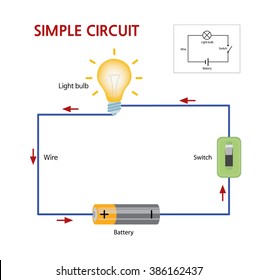
Electrical energy occurs when electrons move through a circuit. As mentioned, batteries use a positively charged cathode and a negatively charged anode to accomplish this electron movement by pulling electrons from the negative to positive side. The anode and cathode are suspended in an electrolyte solution to facilitate the electrons’ movements. As the name implies, a separator separates the cathode from the anode within the battery. This ensures that electrons must move through the entire circuit (and your lightbulb) before reaching the positive terminal.
Anodes and Cathodes
The anode is the negative terminal of the battery. It is typically made from either a porous carbon material (such as a graphite mixture) or a metal that is negatively charged. When a battery is at full charge, all of the extra electrons are on this side of the battery. The electrons then flood towards the cathode once the battery is in use.
A cathode is the positive terminal of the battery, composed of a positively charged metal oxide (such as lithium cobalt oxide). It receives the electrons from the anode during battery use.
Everyone experiences what happens when all of a battery’s electrons arrive at the cathode when their car doesn’t start due to a dead battery. Once the electrons are all on the cathode’s side, a battery must be recharged in order to be used again. Typically, this is done by using an electrical current to push the electrons back to the anode. In cars, the electrical current is generated when the car’s gas engine runs. The engine turns a generator (called the alternator) which feeds electricity back to the battery, thus refilling the anode terminal with electrons as the car rolls down the street.
Chemical Reactions
As the electrons make their way from the anode to the cathode, a chemical process occurs in the battery. This is because changing the electron count in particles will ultimately change the chemical makeup of that particle. For example, in Lithium Ion batteries the negative lithium ions in the anode merge with the positively charged lithium cobalt oxide molecules in the cathode and transform them into a less positively charged molecule (since the negative ion gives it’s extra electron to the positive cathode’s molecule).
- Battery Circuit Diagram – An image of a battery circuit showing ion flow from anode to cathode.
- Boundless Chemistry: Batteries – This university level text dives deep into the chemical changes that take place in various battery types.
Types of Batteries
Batteries come in varying shapes, sizes, and strengths from a half-volt potato battery to the 180kg lithium-ion batteries that power the International Space Station.
Batteries can be split into two categories, primary and secondary. The difference is that primary batteries cannot be recharged whereas secondary batteries are rechargeable.
Primary batteries, ones that are unable to be charged, are most commonly created using one of three materials: zinc-carbon, alkaline, or lithium. Since they cannot be recharged, once they are used they must be discarded or recycled. This makes them less than ideal for the environment as the harsh chemicals in these batteries can seep into the soil at trash depots. However, these batteries tend to contain a higher initial voltage and capacity than rechargeable ones and so need to be removed less often.
The oldest consumer battery type, zinc-carbon batteries are the standard, cylindrical batteries used for flashlights or battery-powered toys. As the name suggests, they are composed of a zinc anode and a carbon cathode, surrounded in an ammonium chloride electrolyte solution. These batteries are inexpensive to produce and cheap to buy, but don’t last long in comparison with other battery types. They work best for electronics that consume little energy.
While outwardly similar in appearance to zinc-carbon batteries, alkaline batteries’ potassium hydroxide electrolyte gives them a much longer run time and shelf life. Because their materials are costlier, they are significantly more expensive than zinc-carbon. The expense, though, may be worth it for electronics that are a hassle when they run out of juice, such as television remotes or video game controllers.
Button batteries, named after their resemblance to small silver buttons, are single cell disk batteries that are used in watches, hearing aids, and other tiny, low-power devices. The top side of the disk is the negative anode and the bottom is the cathode.
These batteries are notorious for being dangerous, especially to children, due to their prevalence of being swallowed. Occasionally, the battery will get stuck in the esophagus. Once there, it produces an electrical current which causes burns that can be fatal in the body. The danger is especially prevalent in batteries that are not assembled correctly. Button batteries have been the reason for a number of lawsuits by product liability attorneys and have paid out millions to consumers.
Secondary Batteries (Rechargeables)
While advantageous for the environment, secondary batteries (or rechargeables) traditionally tended to not last as long as primary batteries. However, battery technology has improved significantly so that rechargeables are giving primary batteries significant competition in all uses. Also, because secondary batteries have a lower internal resistance than primary, they are preferred for devices with a high current demand, such as power tools.
A negative of secondary batteries is aging and self-discharge. Self-discharge is the loss of stored energy from a battery when it sits unused. Therefore, maintenance is required for rechargeable batteries that are expected to be stored for extended periods of time. Battery tenders can counter the effects of self-discharge by constantly inputting a low amount of charge into the battery. Even with good maintenance, though, a secondary battery only has a limited number of charge cycles before it can no longer be recharged.
Lead-acid batteries are most commonly used to power vehicles like cars, boats, or motorcycles. They have been around since the middle of the 19th century and are bulky, heavy, block-looking batteries. They are able to produce the 250 amp burst required to start the average car, but must remain charged or the batteries will become unusable.
Although all secondary batteries have a limited number of charges, lead-acid batteries have a particularly low lifespan, ranging from only 200-300 complete cycles. Also, the lead in lead-acid batteries is highly toxic for the environment when those batteries do need to be discarded.
Invented 40 years after the lead-acid battery, nickel-cadmium batteries are known as the basic, forgiving batteries of the rechargeable battery world. They have been used in everything from radios to medical equipment and power tools. However, due to the high toxicity of cadmium, environmental regulations have limited its non-commercial uses. Nickel-cadmium batteries also have a high recharge cycle count and can be stored for long periods of time (as opposed to lead-acid batteries). They also can be charged quickly without causing damage.
One major downside of nickel-cadmium (and its brother NiMH below) is that it is subject to something called a memory effect. The memory effect takes place if the battery isn’t fully discharged before it is recharged. Over time, the battery seems to ‘remember’ the usual point of discharge before it is recharged. Eventually, it will not provide any power past that point.
The next incarnation of nickel-cadmium, nickel-metal-hydride batteries (NiMH) were developed in the 1980s. They are similar in specs to nickel-cadmium, but generate 40 percent higher energy and are much less toxic for the environment. Because of that, they are the most available rechargeable battery for consumers.
One downside is that they can be more finicky to charge than nickel-cadmium and are more susceptible to self-discharge over a shorter period of time.
Lithium-ion is the slick, newest secondary battery. It was developed in the 1990s and competed with NiMH batteries to be the premier consumer rechargeable battery. The lithium-ion batteries have a lot of advantages: a very low-maintenance charging schedule, high energy potential, and the ability to produce a high current. They are perfect for use in phones as these batteries have a low self-discharge rate and no memory effect. As a result, Lithium-ion batteries are used in most daily-use gadgets or mobile computers.
As anyone with a two-year phone contract can attest, lithium-ion batteries have a problem with aging. They typically fail within two to three years, regardless of use. It’s not a coincidence then that cellphone payment plans end predictably just before the phone’s lithium-ion battery.
Fuel cells are so unique, they are almost a separate category from batteries. Instead of using a sealed cell, they require the constant input of reactants to create electricity. Typically, fuel cells use hydrogen pumped to the anode and oxygen pumped to the cathode side. The small hydrogen atoms move across to the oxygen side producing energy and combining with the oxygen atoms to dispel H2O, or water.
One major advantage to fuel cells is that they create zero harmful emissions and are essentially pollutant-free. The only by-products of their energy process are pure water and heat. Finding a clean energy source is huge news, as humans are increasingly aware of the harmful effects of environmental pollutants.
Unfortunately, the cost of requiring a constant supply of hydrogen has limited the application of fuel cells. Primarily, these devices are used on the space station and on rockets. As an added benefit, astronauts are able to drink the purified water that is produced when the fuel cells generate power.
Scientists are working on catalysts in hopes of improving the cost and efficiency of fuel cells. They aspire to one day make fuel cells more applicable for less stellar, public applications.
- Parker-Waichman LLP: A National Law Firm – For more information regarding lawsuits for damage or injury resulting from faulty batteries.
- How to Make a Potato Battery – Tutorial on making a battery from a potato.
- Different Types of Batteries and Their Applications – A resource for further examination of the pros and cons of various battery types and their specifications.
- Future of Batteries: Winner Takes All? – Detailed, business article on the state of the battery market and its predicted future trends, based
 C.B. James Writing